How Light Shapes Mood Like a Painted Portrait
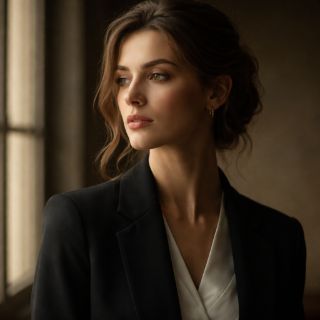
Before you choose any other element or pose the picture, you have already made an emotional decision. That decision is to be found in light.
The Old Masters had an innate understanding of this fact. Rembrandt placed a small triangle of light on his subject's shadowed cheek, creating a sense of depth and quiet dignity that flat, even light simply can't touch. You can recreate that same effect by positioning someone at a 45-degree angle to a single window, letting one side of the face fall into shadow.
Soft, diffused window light on an overcast day works in a whole other way. It wraps around the face, gentle, and kind of caressing. Think of Vermeer's women, lit as if the room itself were glowing.
A bit of light from the side adds character: light at a 90-degree angle sharpens, turning the light closer to spotlight appearence. A small lamp placed to the left of your subject will turn an average living room pictures into drama. Open shade outdoors provides you with even, flattering light with no harsh shadows.
There is no way you can choose it without telling your viewer what to think of the face.
Composition Choices That Give Portraits Structure and Grace
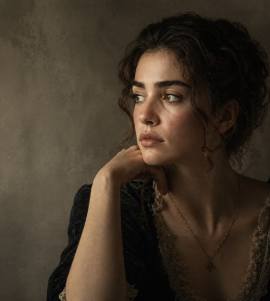
Painted portraiture has always known something photographers are still learning: where you place a person in the frame says as much as their expression does.
The rule of thirds is a good starting point. Position your subject's eyes along the upper horizontal line and the portrait immediately feels more alive than a centered shot. Classical painters did this instinctively, pushing figures slightly off-center to create breathing room.
That breathing room is negative space, and it earns its place. Empty areas direct attention. A subject gazing toward open space feels contemplative; one pushed to the edge of a tight frame feels pressured. Both are valid. Neither is accidental.
Hands are often ignored and almost always wrong. Vermeer understood that a hand resting naturally near the face anchors the viewer's eye in a quiet loop.
Gaze direction, background simplicity, and lens choice all work together. A 50mm lens keeps proportions honest. A wide angle distorts them, sometimes beautifully.
Every element should serve the person. Nothing else.
Expression and Storytelling Bring the Portrait to Life
A technically flawless portrait can still feel empty. What separates a memorable image from a merely competent one is almost always the same thing: the person inside it.
Authentic expression rarely comes from asking someone to smile. Photographers like Platon spend time talking with subjects before ever raising the camera, letting conversation dissolve self-consciousness. Pacing matters too. Rushing a session produces guarded faces. Give someone ten minutes just to settle, and you'll often see the real person appear.
Prompts work better than poses. Ask your subject to think of someone they love, or recall a specific memory. The resulting micro-expression is something no instruction could manufacture.
Story builds through everything surrounding the face. Clothing, location, props, and gesture all carry meaning. Environmental portraiture places people within their world, a chef photographed mid-prep, a teacher surrounded by chalk-dusted boards. Editorial portraiture leans into concept and mood. Minimalist studio work strips everything back so expression carries all the weight. Cinematic portraiture borrows film grammar, wide framing, dramatic light. Intimate documentary-inspired work simply follows people honestly.
Each style asks the same question differently: what does this person's life actually feel like?
A Strong Portrait Always Says More Than a Face
Every exceptional portrait you have ever gawked at likely captivated you in ways you could not quite comprehend. There is a reason for your being taken by them; such moments do not just happen. Light cannot fall upon the face to create images. The face does come alive in many instances-and presence itself awakens-with a coy touch of light that points some reality even if only in shadow. The picture builds up an old story or puts into action future possibilities must also be a right decision. There is something forged when the pieces come together that a lens cannot do in isolation. Amazing gear and perfect technique have a place, but the exception in the picture is feeling, A shot people will go out of their way to return to is characterized by emotion. So ask yourself: what mood do I want this image to hold as I raise the camera? What is the connection between me and this person? What story should someone walk away carrying? The true answer to these questions will lead you, naturally, to the technical choices.